E1 LaplaceLP(6,1e5) with stimulus “pulse 0 1 10µ 1n 1n 50µ 100µ” generates erratic over/undershoots with results depending on simulation time:
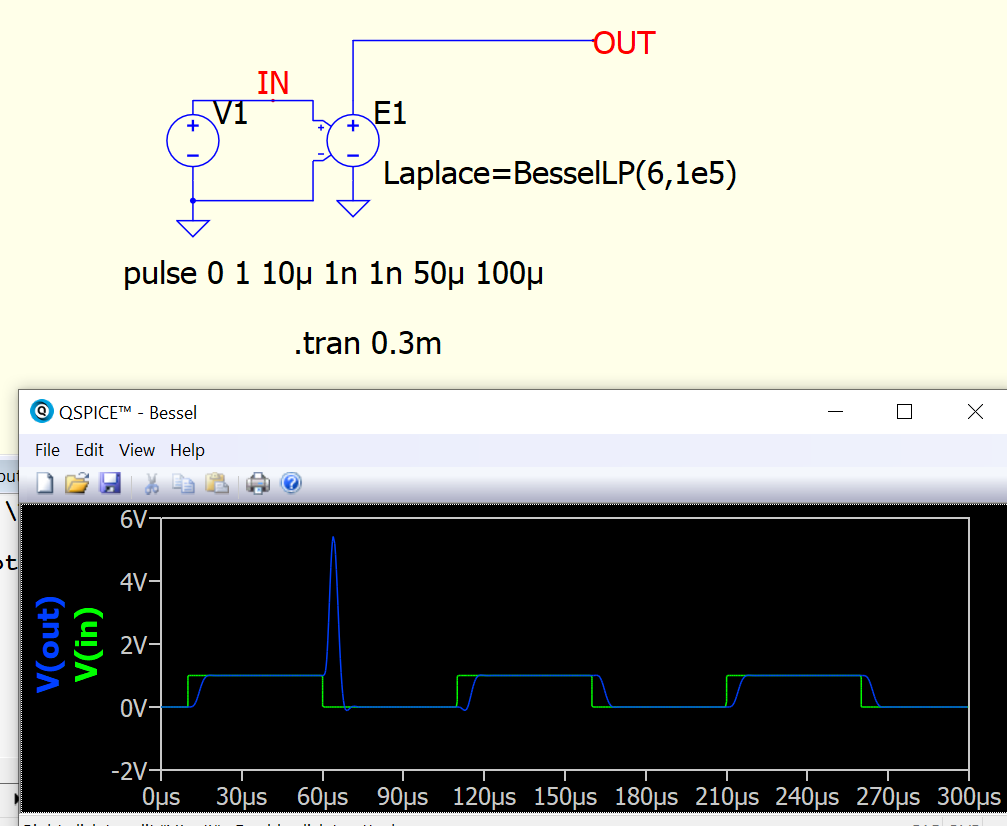
Yep. A 6th order is a difficult filter in the time domain. You’ll probably want to go to Edit=>Preferences=> and uncheck “Fast(less accurate) Math”
–Mike
“Unchecking Fast Math” works perfectly. Thanks Mike.
Is it a good idea to run first simulations with and w/o “fast math” and compare results to decide later - for long running simulations - whether the fast way will do the job?
Can you give caveats for nasty types of circuits?
If answering my questions detract you from improving QSPICE, please ignore them.
I like very much, what I see up to now.
One comment about your fabulous response time - over the week end: Top
and thank you again for creating a better “Spice”.
I use “fast math” all the time. Well, unless it doesn’t work, then I uncheck it.
1 Like
I also have run into numerical errors with
LAPLACE=BESSELLP(5,10E5).
Fast math works for 3 pole, but gives bogus outputs for 4 and 5 pole with my input.
Math80 bit works for 3, 4, and 5 pole.
Guessing that the Laplace code is compiled, would it be possible to trap and alert to the QSPICE output window to warn users of this apparent overflow problem?
Also, agree: Thank you again for creating a better “Spice”
Thanks,
John