Zerokey vs UWB vs CUWB

Zerokey has a location technology based on ultrasonic measurements. Since the speed of sound is a million times slower than radio waves, you can very precisely time the audio waves and thus have high accuracy. This comes with a host of limitations such as large tag size, low locate capacity, short battery life, environmental influence, small working volume, etc, so UWB still wins generally in many ways.

Zerokey produced a video purporting to show the natural difference in performance between their system and UWB, apparently using Sewio as the reference system:

The punch line is this image showing Zerokey (white) versus UWB (red):
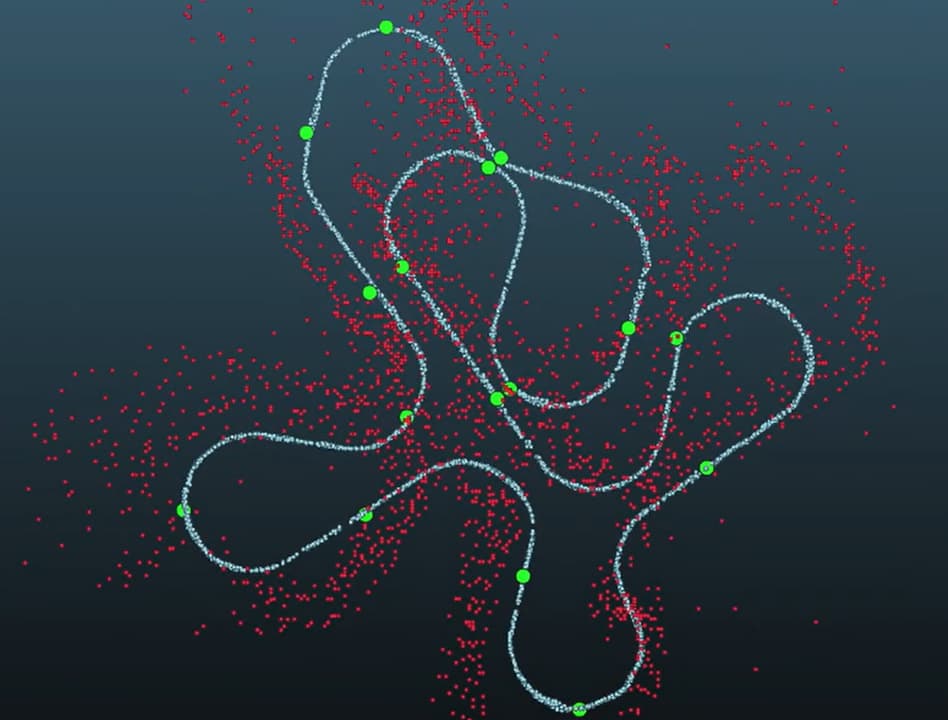
The UWB looks horrible, often not even within 1 meter of truth. That looks so bad that I have to believe they set up the UWB wrong in some way.

We decided to set up a test, using the same train, to show off our CUWB system performance doing a similar task:

And here is our results, the track path shown is +/- 5 cm from ideal:
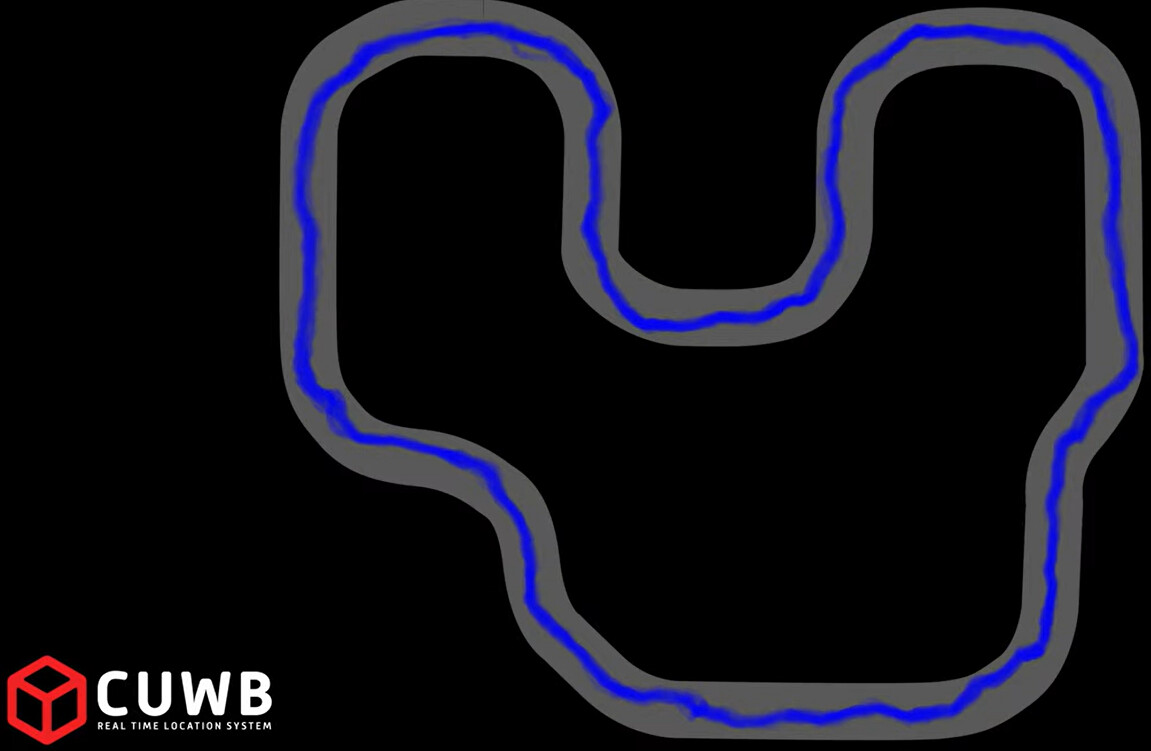
The Zerokey system is more accurate, but UWB can get much closer than they show in their video. Their video is misleading as to the true capability of UWB.

Our video was with 18 anchors, 100 Hz tag, smoothed 200 ms. At those settings, I believe the system has more locate capacity and longer tag battery life than Zerokey.

Mike Ciholas, President, Ciholas, Inc
3700 Bell Road, Newburgh, IN 47630 USA
mikec@ciholas.com
2 Likes

It’s not like the zerokey system is a new idea. Over 20 years ago MIT developed a system called Cricket which was using a similar approach. It was cheap and simple and gave great results. But due to the technology used it also had significant limitations.

All zerokey look to have done is take an old idea, polish it up into a product and add lots of marketing. It still has the limitations of the old system. It’ll be a good option in some situations and a terrible choice in others.
As for the video, let’s be honest who creates publicity videos showing the competition at it’s best? In a way it’s good they show UWB as being that bad. If they showed UWB as being 10-15 cm accurate then they would still be better and it would be easy to brush off any videos from UWB companies claiming better as exaggerating or cherry-picking their results. By showing UWB as being that poor even the briefest check of the options will show how unrealistic their video is.

Our UWB will track a car at 160 km/h with 3cm accuracy over a 400m x 40m area.
With IMU integration but without smoothing because you add 200ms of smoothing and the auto-steering robot gets very upset.

Details of this system would be enlightening such as how many anchors, what channel, tag beacon rate, etc.

What do you use for ground truth when assessing your accuracy at speed?

I can understand how your precision can be observed, looking at the smoothness of the motion especially for a large mass vehicle like a car, but accuracy is another beast entirely to measure under these conditions.

At 160km/h, a 3 cm position change is only 675 microseconds, so being within 3 cm at that speed along the axis of motion requires some pretty fine time measurements to verify.

RTK GPS wouldn’t do much better than 3 cm, so it kind of doesn’t work for this, either, as a ground truth. For a moving object, it won’t be very accurate along the axis of motion.

There are a number of “enhancements” to make the raw UWB look better, the simplest is smoothing like we did in the above video and is enabled by our high tag rates. Using a dynamics model and Kalman filtering (which we have also) provides similar smoothness with less latency, so is better for control dynamics. This is harder for users to setup properly, though.

The ultimate is always IMU integration. UWB has short term noise with long term stability, the IMU has short term stability with long term drift, so the two technologies complement each other very nicely. The penalty is shorter battery life to keep the IMU powered and running the math. Yaw stability also comes into play as the magnetic sensor is affected by the environment. For a fast moving rigid object like a car, the magnetic field isn’t required since yaw can be inferred by motion.

We’ve had IMUs in previous generations of our tags and will be adding a 9 axis IMU to the CUWB 300 series tag lineup later this year. Exactly what the impact will be on battery life is TBD. It might not be so bad as the newest generation of IMU chips have improved gyro current draw significantly, which was always the main issue in the past. The tags will remain the same size.

Mike Ciholas, President, Ciholas, Inc
3700 Bell Road, Newburgh, IN 47630 USA
mikec@ciholas.com

Details of this system would be enlightening such as how many anchors, what channel, tag beacon rate, etc.

What do you use for ground truth when assessing your accuracy at speed?

Total site is around 55 anchors but the system is only using 8 at a time. Normally the closest 8 but there are a few exceptions built in to allow for geometry and obstructions. 300 DS TWR measurements per anchor for 2400 total measurements into the tag, some filtering and outlier rejection on the measured ranges and then 100 Hz position output.

As you say, assessing accuracy is tricky at those speeds. Lateral accuracy you can test using a straight line marked on the ground and a camera to measure the true deviation from the line. Vertical is fairly simple, the site is flat with a slight gradient but after allowing for that and eliminating body dynamics by running at a constant speed you expect a constant height output. Longitudinal accuracy is harder, we don’t have hard proof of the accuracy at high speeds. At low speeds where it’s easier to verify the data is fine. Integrated velocity and position deltas all add up during a run as do start and stop locations. The data all lines up correctly with 100 Hz RTK GNSS. All of the measurements we’ve been able to take are consistent with the longitudinal accuracy is as good as the other axis.
Ultimately given the UWB will have random position errors the IMU and Kalman filter is doing a lot of the work in giving you that level of accuracy at speed. We use the same core KF when using GNSS as a position source and that’s been proven to be accurate at speed by detecting when you drive over a known marker point.

We also do camera tracking, that is a little different since they tend to move slower and heading accuracy is critical. It doesn’t take much of a yaw error for your AR graphics to be in the wrong place when they zoom in. For that we use 12 anchors at 200 Hz each and fit a better (and far more expensive) IMU.