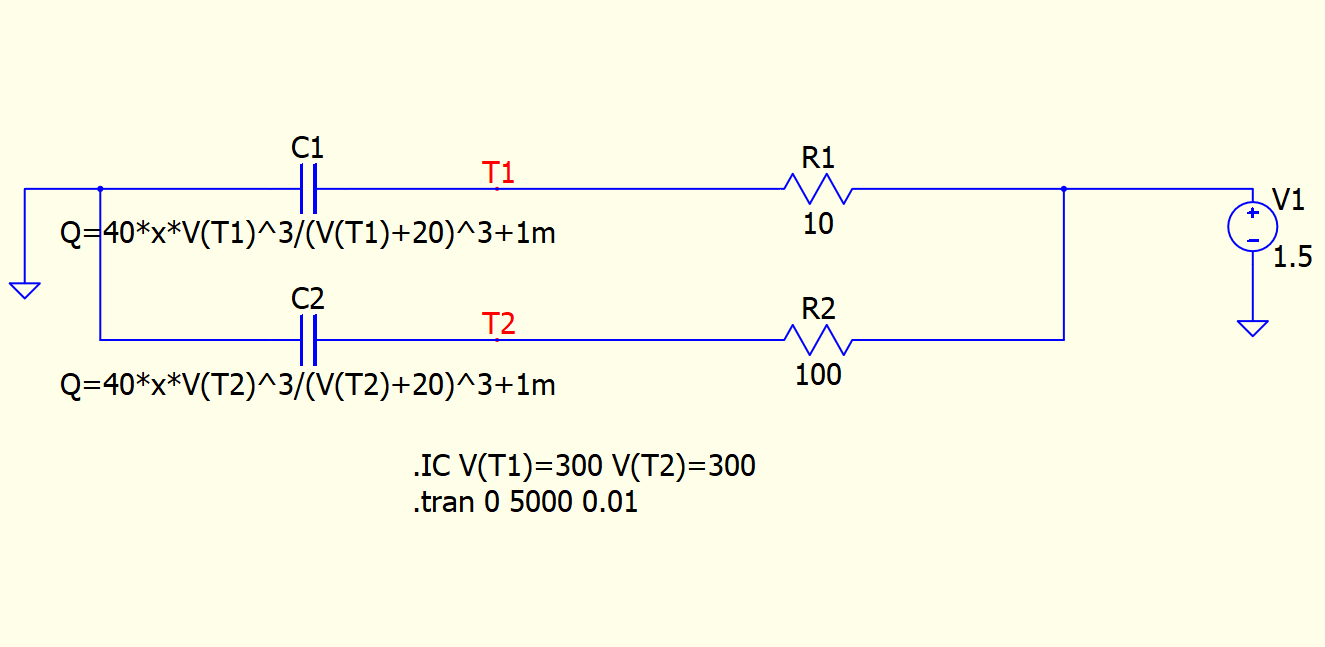
I have run into some issues with a behavioral Capacitor of the definition:
C = 40.0 * V(T1)^3 / (V(T1) + 20)^3 + 1m
This is the simulation:
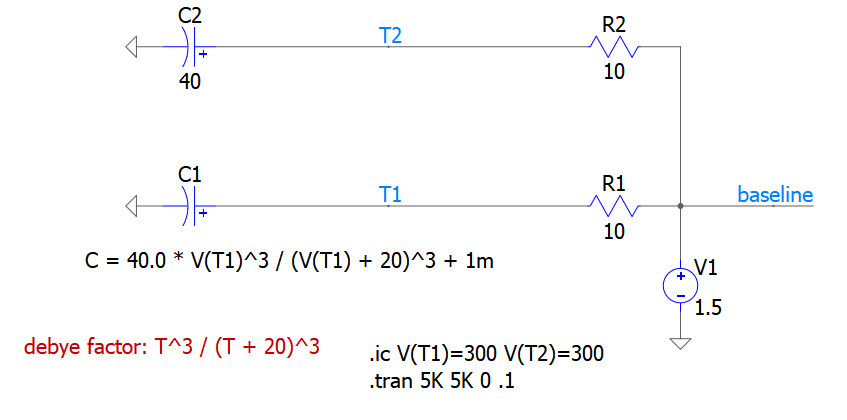
This is a thermal model following the usual SPICE equivalences of:
- heat capacitances are capacitors
- heat conductances are conductances
- heat flows are currents
- temperatures are voltages
- heat reservoirs are voltage sources
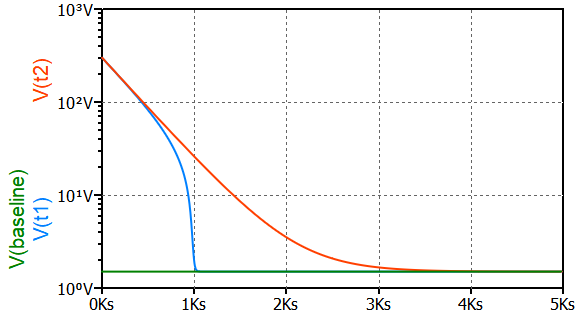
The simulation should show how the objects (C1 and C2) cool from room temperature down to 1.5 K:
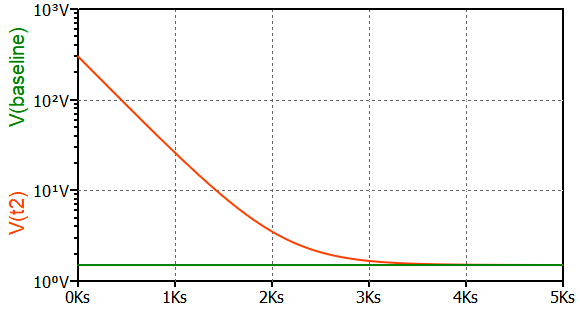
Applying the proper Debye formula for the heat capacitance will reveal a faster cooldown:
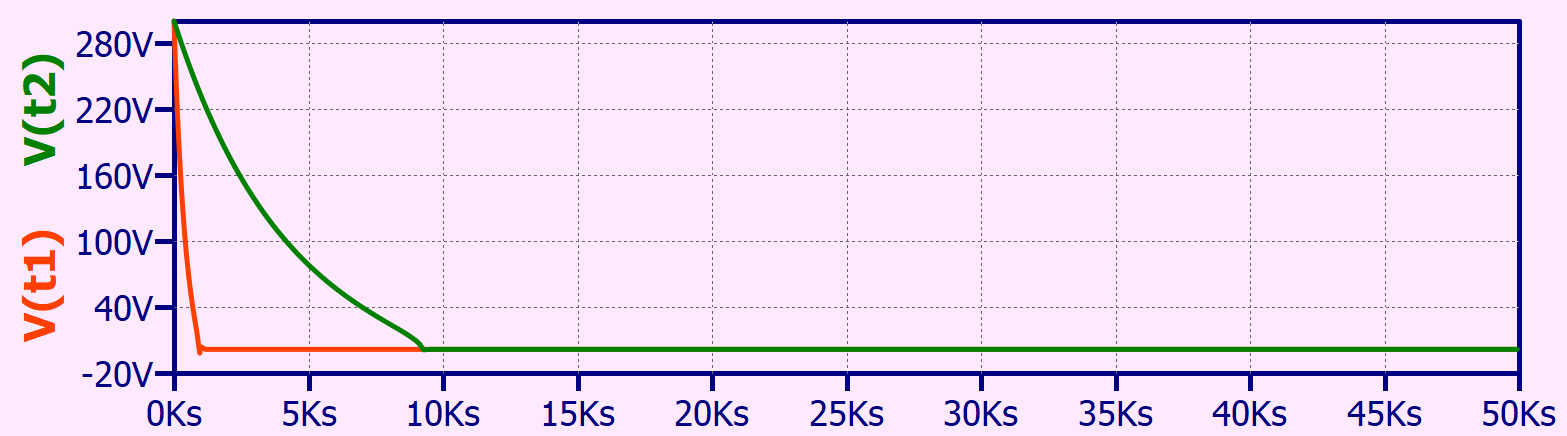
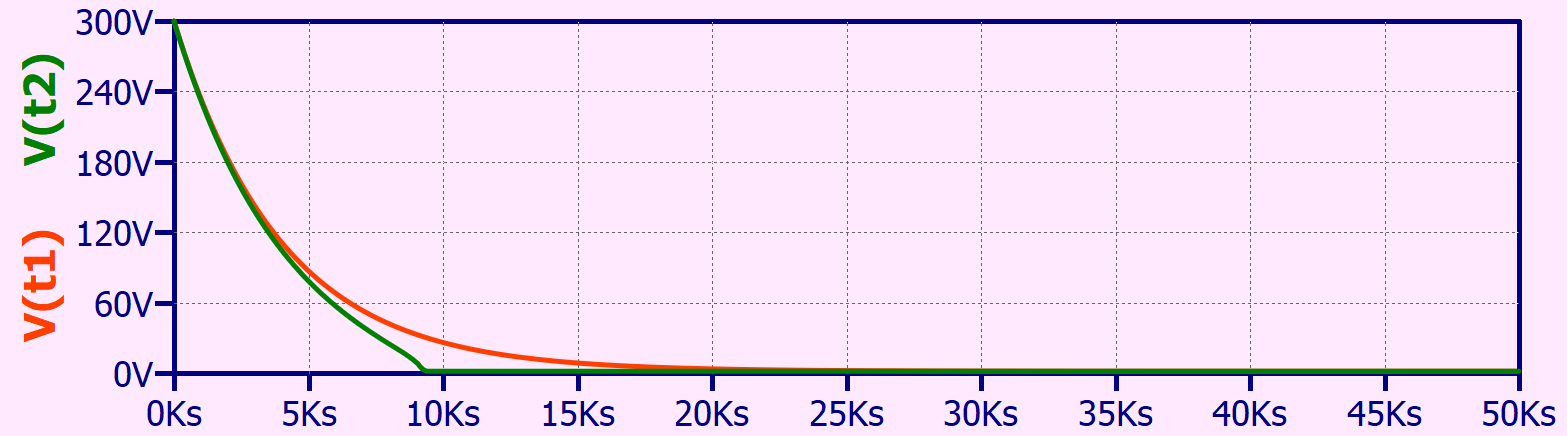
It all works well until the voltage on C1 suddenly bursts into oscillation:
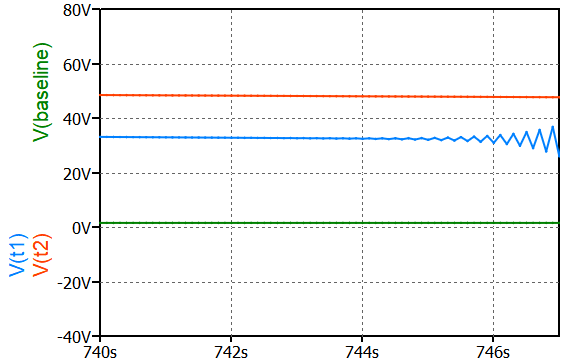
This is unexpected, because the formula for C is well behaved and smooth on the positive domain.
I have tried different step sizes, but nothing solved the issue reliably, however forcing a small stepsize on a millisecond scale made the simulation stable, but deliver wrong results, namely the temperature (aka voltage) got stuck at 40, slightly oscillating around that value.
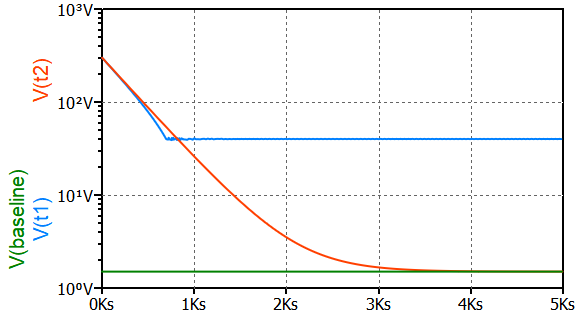
If I change the value 20 in the capacitor’s definition, the wrong result will continue stabilizing at twice that value.
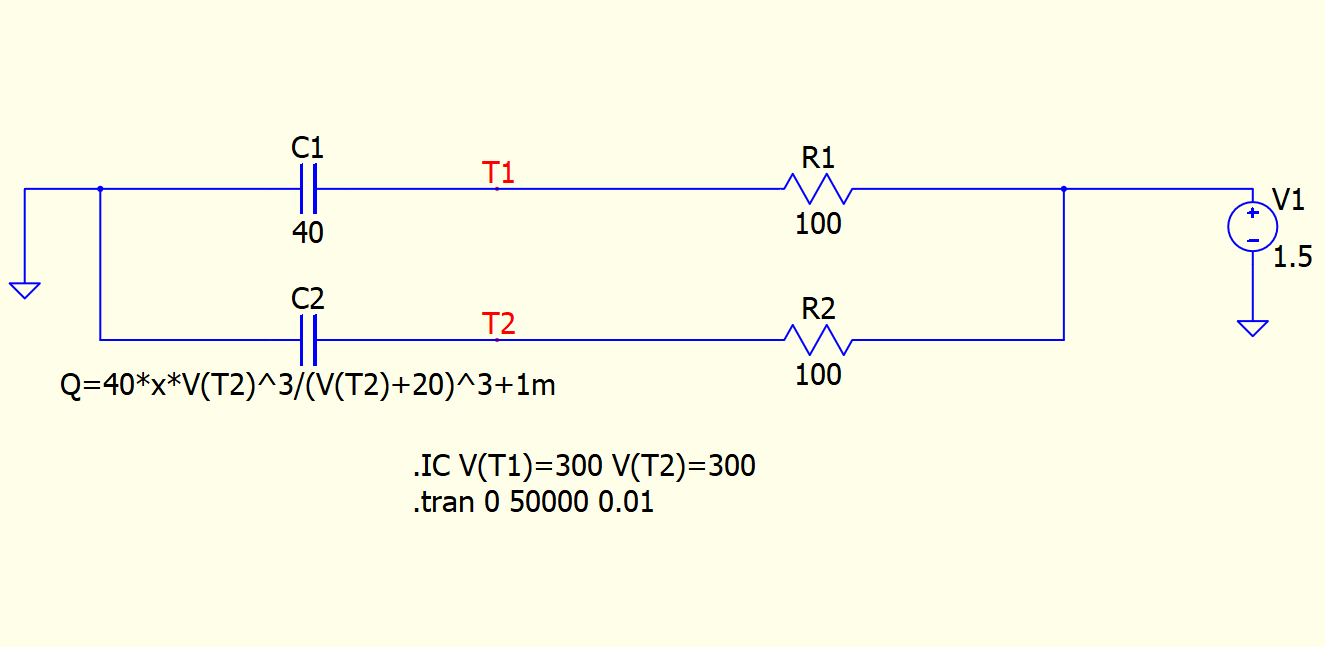
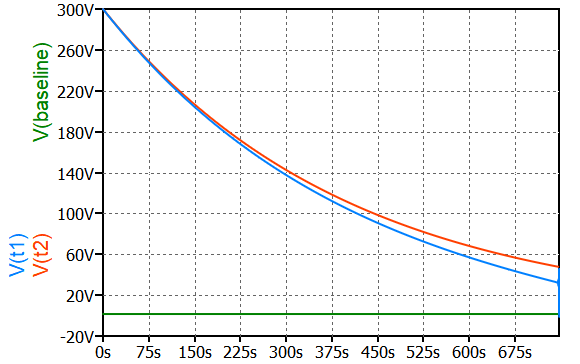
Just for completeness’ sake, below is the correct simulation, which I got by pure trial and error or some value tuning, but which is not at all reliable, especially once I add more things to the circuit or change values: