Could you share some guidance, how op-amp common-mode voltage range can be modeled with built-in RROPAMP Amplifier?
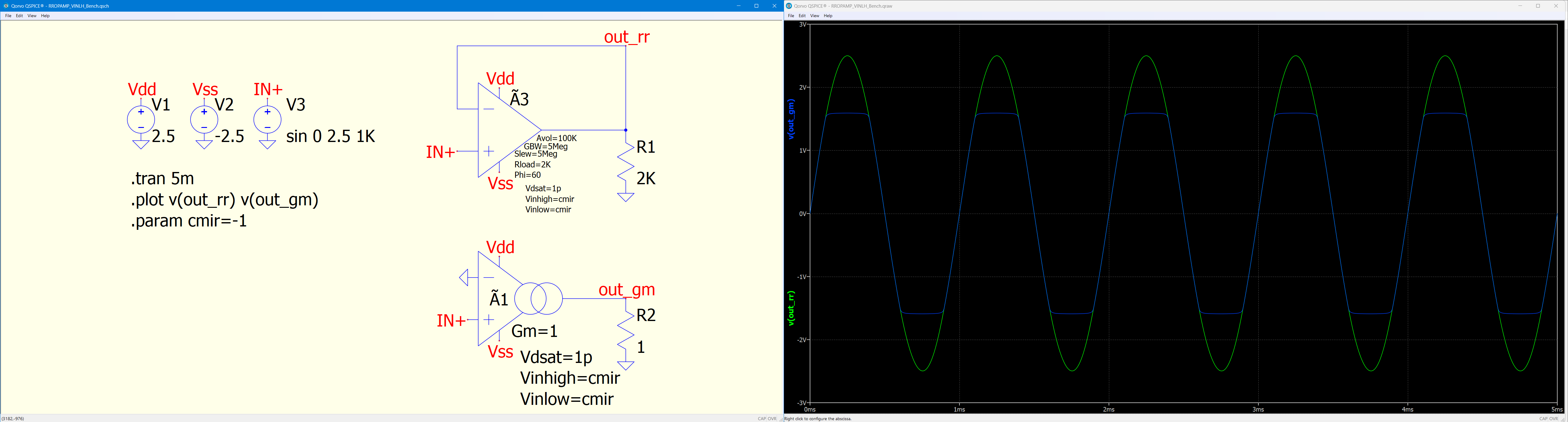
I tested VINHIGH and VINLOW with gm-amp and op-amp, but I couldn’t get parameters work with op-amp. According to help, both Ã-Devices should support parameters.
Feature is also documented with MultGmAmp in “Qspice - Device Reference Guide by KSKelvin.pdf” on page 303.
I studied a bit more how VINHIGH and VINLOW works with native op-amp model. Looks like VIN* scales down gain and bandwitdh of op-amp’s input OTA, so in follower setup effect is not clearly visible due to loop gain tries to correct output.
In test bench below, op-amp input common mode range is DC sweeped with constant differential voltage and it shows VINLOW has affect to output near rail, but VINHIGH has no effect.
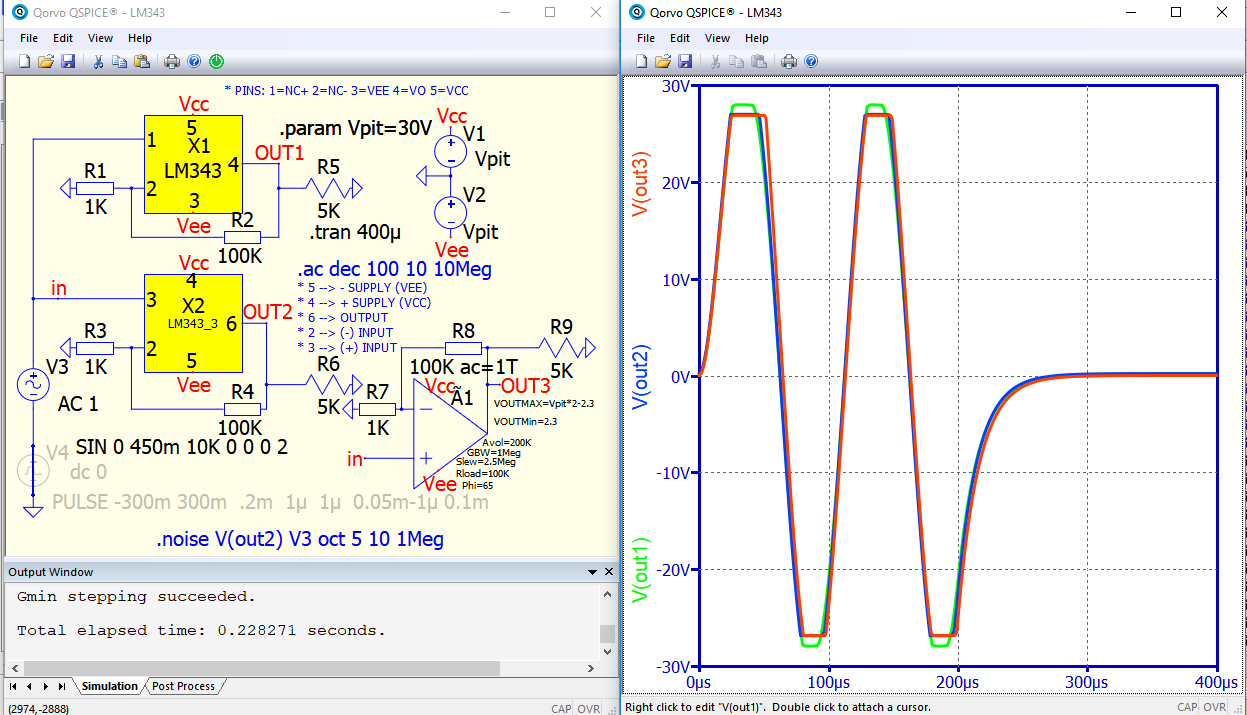
Second test bench just clarifies what this study is after; way to simulate bipolar input stage amplifiers like ADA4077. Currently implemented VIN* parameters obviously cannot offer that.
RRopAmp is rail-to-rail. Your situation reminds me of a report I sent to Mike in March 2024, where he mentioned he might implement a different device to handle older-style op-amps that aren’t rail-to-rail and have complementary emitter follower outputs. I didn’t have a practical need for it, so I never followed up on it.
If you have a specific use case, consider emailing Mike to see if it is possible to get a new device to support your work. However, he might currently be out of town (as Qspice not update over a week now). Waiting for the next QSpice update—which is likely when he returns—may be the best time to send the email. His email in Qspice > Help > About Qspice.
Thanks for your insight KSKelvin. You are correct that typically rail-to-rail input op-amps common-mode input voltage range reaches very close, or even includes supply voltages. But currently RROPAMP does not seem to handle even RRI case, if you specify VIN* to a few millivolts it does not work intuitively. Also, why to specify parameters if they do not work in similar way in both Ã-device.
I can try to email Mike when updates starts dropping again.
Please check with Mike regarding both of your questions. I have encountered instance parameters that were not supported in a QSpice native model even though they were documented in the help file. Therefore, it is worth verifying whether VINHIGH and VINLOW are expected to work or were not supposed to be there in RRopAmp in the first place. And how certain behavioral criteria are supposed to be simulated with QSpice devices.
I am not an expert in op-amps, but I think your questions are important. Since no other community members can give you further advice, contacting Mike might be a good start. If you get an answer or an update in the future, please keep us informed so we can all learn.
@bordodynov it seems @FrankSh question is related to clip from op-amp input.
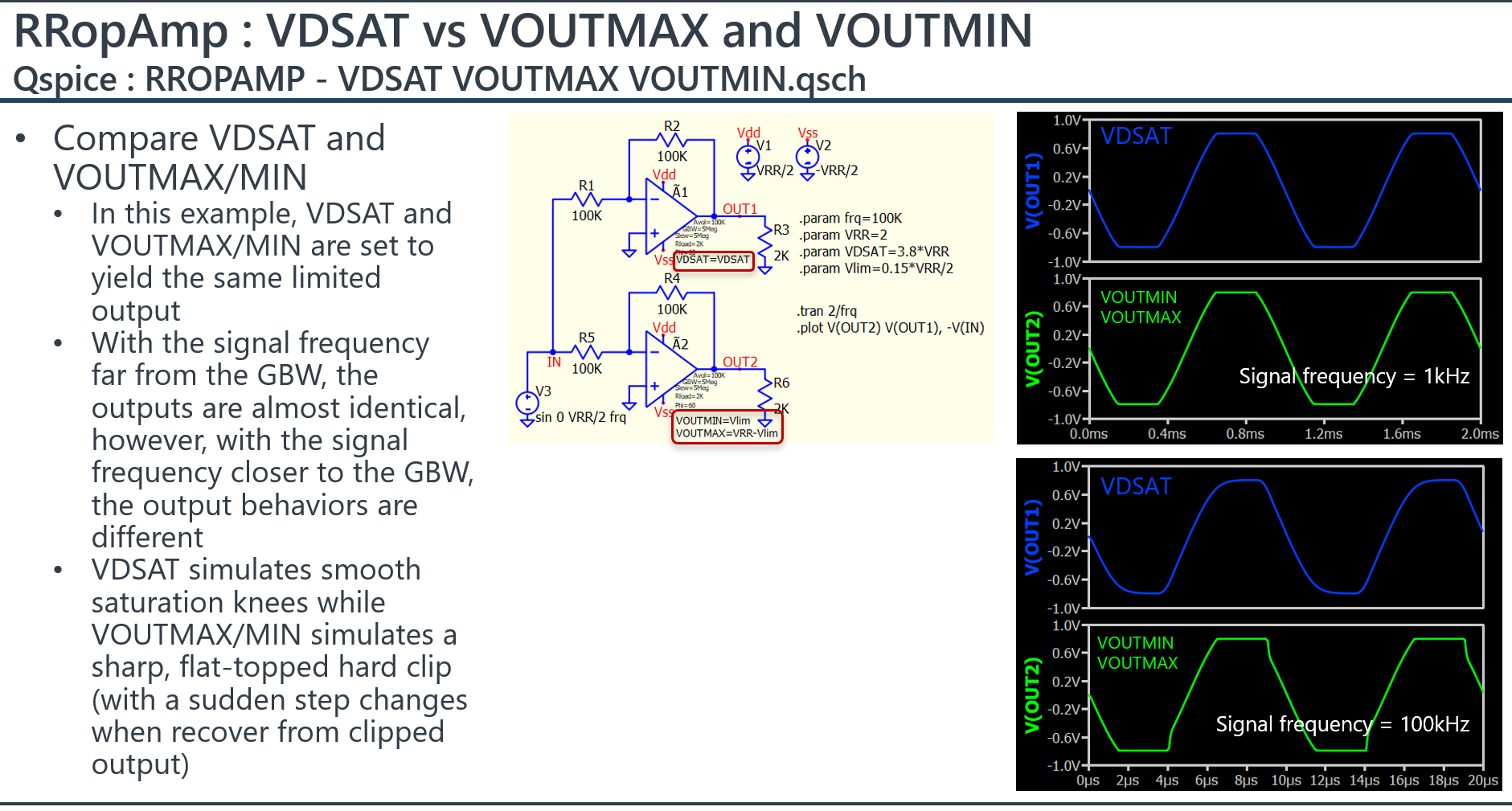
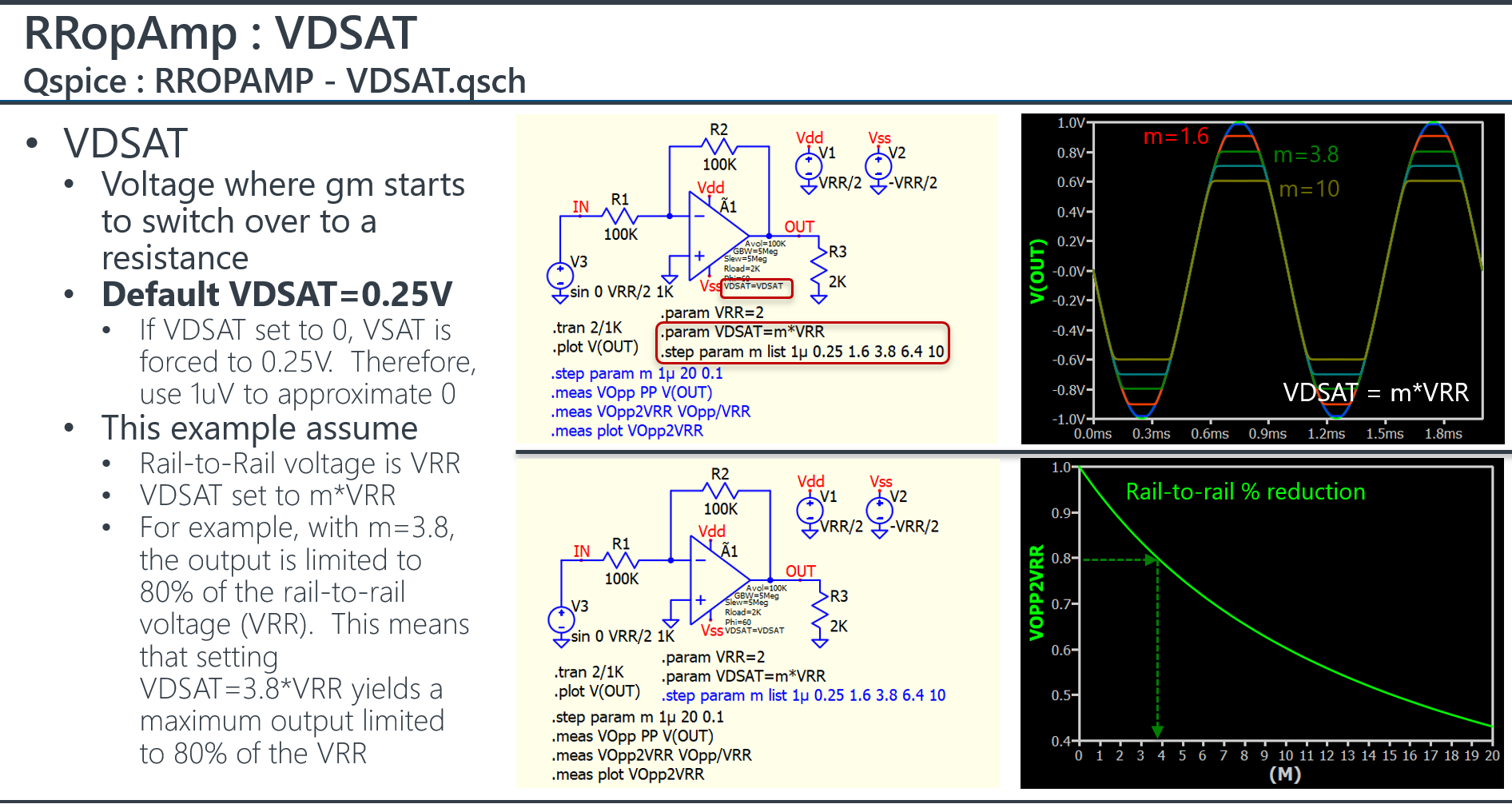
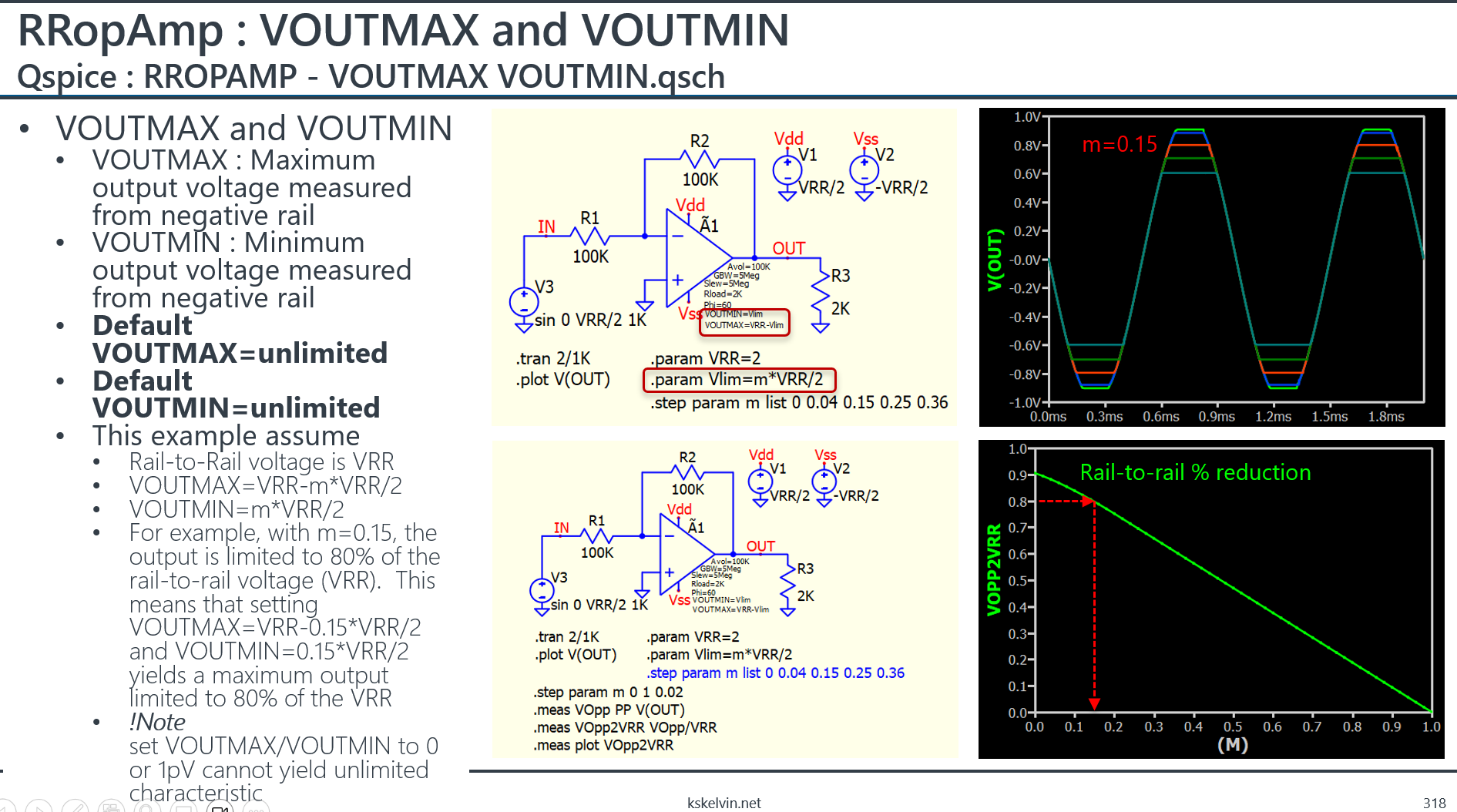
In regardness the situation, I ran an extra test to compare the relationship of VDSAT and VOUTMAX/VOUTMIN with the output-voltage and rail-to-rail voltage in RRopAmp model.